Chapter 1 of 10: Written by Christian Harpelund
Most organizations ask about satisfaction. That’s the wrong question
First article in a series about understanding and improving organizations’ ability to onboard new employees.
Short summary (TL;DR)
Many organizations measure satisfaction with onboarding. But a high satisfaction score does not necessarily indicate whether a new employee actually feels well prepared for the job.
In this blog post, you will learn:
- why satisfaction and a good onboarding experience are not the same thing
- which important issues a satisfaction question can overlook
- why it is more valuable to measure what employees have actually gained from their onboarding
- how FastTrack can provide a more accurate picture of whether your onboarding is working
In short: If you want to know whether your onboarding has a real impact, you should not only ask whether the employee was satisfied. You should measure whether the organization actually provided what the employee needed.
Nor is it a one-off. We’ve been measuring organizations’ onboarding capability for over 15 years, and the pattern keeps repeating: satisfaction and success are far more loosely connected than most people assume.
If you work with onboarding, you’re probably already past the question of whether onboarding matters. You know it does. You’ve seen the effect on retention, on time-to-productivity, on how quickly new hires become genuinely contributing team members. The question most of us actually struggle with is: how do we know if our onboarding is actually working? And that’s the question most measurement approaches fail to answer.
You’re reading a chapter in our new blog series on understanding and improving organizations’ ability to onboard new employees.
You are currently reading:
Chapter 1: Most organizations ask about satisfaction. That’s the wrong question
Read also:
Chapter 2: Six dimensions, one model: What good onboarding actually looks like
Chapter 3: From data to dialogue: What a dialogue report can do for your onboarding
Chapter 4: The index: How we track progress – and benchmark against others
Chapter 5: What benchmarks tell us about onboarding across age groups
Chapter 6: Six dimensions, six signals: What does a high or low score actually mean?
Chapter 7: The onboarding curve: The experience doesn’t just improve over time
Chapter 8: The onboarding calendar: Does it matter what time of year you hire?
Chapter 9: From diagnosis to action: How to build a catalog that matches the data
Chapter 10: From data to prediction: What AI can do for onboarding
We’re asking the wrong question
Most organizations that measure onboarding at all ask some version of the same question: How satisfied are you with your onboarding? Maybe with a smiley-face scale or an NPS score attached. It’s easy to administer, easy to report across departments, and it produces a tidy number for the quarterly deck.
The problem is that satisfaction is a mood. It’s a snapshot of how someone feels at the moment they fill out the survey — often in the week following a welcome lunch, a nice starter kit, and a bunch of friendly colleagues. It says very little about whether the person is actually equipped to do the job.
You can easily be satisfied and, at the same time …
- be unsure what your actual responsibilities are
- lack access to the systems you need
- not yet met the people you’ll depend on most day to day
- be fumbling around without knowing where to ask “obvious” questions
None of that shows up in a satisfaction question. But all of it helps predict whether the onboarding actually succeeds.
It’s worth sitting with why satisfaction is so easy to score well on, even when the substance is missing. A new employee typically has low expectations in the first few weeks — everything is new, so a certain amount of confusion feels normal rather than a problem.
People are polite toward those who have just welcomed them. And they haven’t yet reached the point where the gaps in their onboarding become visible as concrete obstacles in day-to-day work. The satisfaction survey tends to land in exactly that window — when the mood is good, but the substance hasn’t been tested yet.
Satisfaction and experience are not the same thing
There’s a crucial difference between how someone feels about their onboarding and what actually happened during it.
SATISFACTION
Did you like it?
EXPERIENCE
Do you have what you need?
It’s the same distinction you see elsewhere in an organization. A customer can be satisfied with an experience that was objectively lacking — because expectations were calibrated low, or because a friendly salesperson saved the situation. Conversely, a process can function well without anyone feeling particularly enthusiastic about it.
Satisfaction is colored by expectations, by how someone judges others’ effort — and by politeness. Experience is about what concretely happened: which steps were taken, and which were skipped.
When you only measure satisfaction, what you’re really measuring is how good the mood was. Not whether the onboarding worked.
For those who work closely with onboarding day to day, this distinction isn’t new in itself — most experienced practitioners already sense that satisfaction scores don’t tell the whole story. What’s new is making that distinction measurable. Knowing intuitively that experience matters more than mood is one thing. Being able to point to specific, discrete parts of the process and say precisely where it breaks down is another.
Why it matters
It might sound like a semantic detail. It isn’t.
If an organization bases its improvements on satisfaction scores, it’s effectively optimizing for making people happy during the onboarding weeks — not for making them productive, secure, and settled into their role. Those are two different goals, and they often pull in opposite directions.
Consider how the two goals lead to different investments. Optimize for satisfaction, and you invest in welcome gifts, social events, and a polished first day. All fine — but it’s surface-level. Optimize for experience, and you invest in making the role’s responsibilities clear from day one, ensuring system access is ready before the start date, and having a concrete plan for who the new hire needs to get to know, and when. That’s structural work, not mood work — and it’s rarely what organizations prioritize, because it doesn’t show up in a satisfaction score.
That doesn’t mean mood is irrelevant. It means mood shouldn’t be the only thing you optimize for when trying to improve something as consequential as onboarding.
From good mood to real impact
To genuinely improve onboarding, you need to know what’s actually happening along the way — not just how it felt afterward.
That requires a different kind of measurement. One that looks at specific, discrete parts of the onboarding journey — not a single overall impression, but several precise readings of what actually happens when a new employee starts.
THE CRUCIAL SHIFT
Don’t just measure whether your new hires are satisfied with their onboarding. Measure whether the organization delivered what the employee actually needed.
Don’t just measure whether your new hires are satisfied with their onboarding. Measure whether the organization delivered what the employee actually needed.
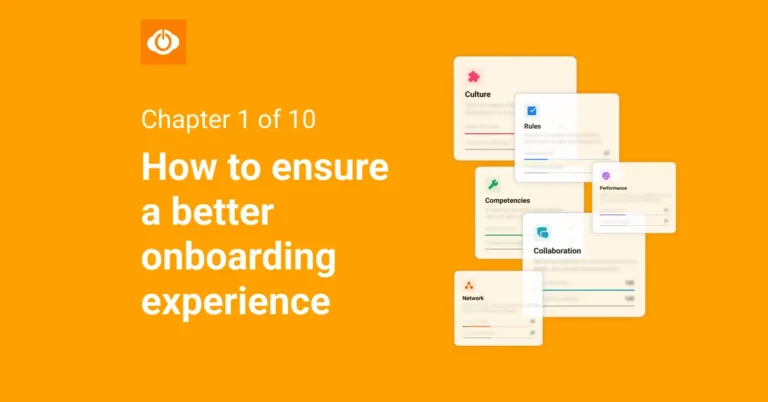
That’s exactly what we built FastTrack to do. FastTrack is a part of HR-ON Boarding+. The tool is based on a model with six dimensions that together capture what a new employee genuinely needs to succeed — not just what creates a good feeling in the first few weeks.
In the next article in this series, we’ll dig into these six dimensions — and why exactly these six give a far more accurate picture than any satisfaction question ever could.
This is the first article in a series about measuring and improving onboarding.
About the author
- Christian Harpelund is a qualified organizational psychologist and works with HR-ON as an onboarding expert
- He is the author of “Onboarding: Getting New Hires off to a Flying Start” and has a new book coming soon, “Kunsten at onboarde en leder” (in Danish)
- He delivers courses and gives talks on onboarding and the organizational frameworks that support effective leadership
How can organizations tell whether their onboarding is actually working?
Why is onboarding satisfaction not enough to measure success?
Satisfaction reflects how a new employee feels at a particular moment. It does not necessarily show whether they understand their role, have access to the right systems, know who to turn to, or have what they need to perform effectively.
What is the difference between onboarding satisfaction and onboarding experience?
Satisfaction asks whether the employee liked the onboarding process. Experience looks at what actually happened during onboarding and whether the organization delivered the support, clarity, access, and connections the employee needed.
Why can employees report high satisfaction even when onboarding is ineffective?
New hires often have limited expectations during their first weeks and may see confusion as a normal part of starting a new job. They may also respond positively because colleagues have been welcoming, even if important parts of the onboarding process are missing.
What should organizations measure instead of satisfaction alone?
Organizations should measure specific parts of the onboarding journey, such as role clarity, system access, relevant relationships, and practical support. This provides a clearer picture of where the onboarding process is working and where improvements are needed.
How does measuring the onboarding experience help organizations improve?
It helps organizations focus on the structural elements that enable new employees to succeed. Rather than only improving first impressions, organizations can identify concrete gaps and make targeted changes that support productivity, confidence, and long-term integration.