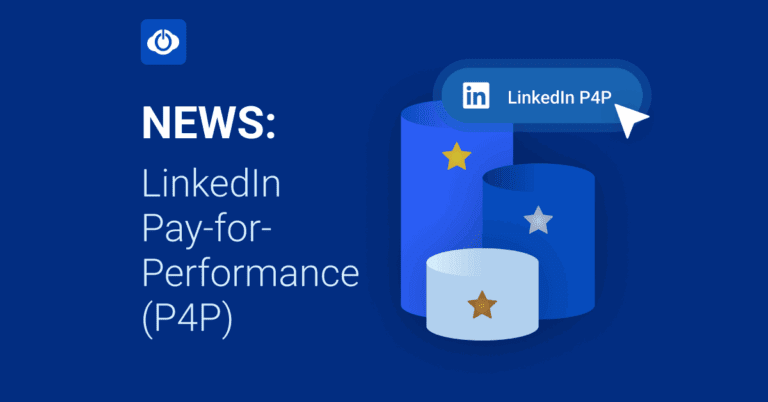
Update on LinkedIn: Goodbye LinkedIn Premium Jobs and hello Pay-for-Performance (P4P)
From May 2026, changes will affect you if you advertise jobs on LinkedIn. As an HR-ON customer, you will soon be using Pay-for-Performance (P4P), while LinkedIn Premium Jobs and Boost are being removed. Read on to learn what this means for your recruitment.
With Pay-for-Performance (P4P), you move away from paying for fixed visibility and instead pay for real results. It’s a more dynamic, performance-driven approach.
Too Long; Didn’t Read (TL;DR)
At HR-ON, LinkedIn Premium Jobs and Boost will be discontinued from May 2026 and replaced by Pay-for-Performance (P4P), which is a more performance-driven approach.
For you as an HR-ON customer, this means:
- better control over your recruitment budget
- access to three levels (Lite, Standard, Premium), depending on your needs
- a simpler workflow in HR-ON Recruit – you simply select P4P
The result is more effective job advertising, better budget use, and stronger performance.
Until now, HR-ON customers have had three options in the Recruit recruitment system for publishing job ads on LinkedIn. From May 2026, that setup is changing.
LinkedIn Premium Jobs and Boost are being phased out and replaced by one unified solution: LinkedIn Pay-for-Performance (P4P).
LinkedIn Pay-for-Performance (P4P) in brief
LinkedIn Pay-for-Performance (P4P) is a more effective way to advertise jobs, offering three levels.
This gives you:
- better budget control
- greater flexibility
- the opportunity for ongoing optimization
At the same time, you gain more precise insight into what works and which campaigns perform best.
In practice, this means:
- better use of your budget
- more relevant traffic to your job posts
- a stronger data foundation for your recruitment efforts
The possibilities with LinkedIn Pay-for-Performance (P4P)
Whether you are already familiar with using LinkedIn as a job advertising platform via HR-ON Recruit, or you have just started, the first thing you should know is what changes have been made in the system.
As an HR-ON customer, you can choose between three levels:
Lite
Solution to increase traffic to your job post
Standard
Optimized for strong performance
Premium
Ideal for maximum reach
You choose the level based on the position’s needs and the breadth of your reach.
How do I get LinkedIn Pay-for-Performance (P4P)?
As a customer, you do not need to do anything differently than usual. If you want to use LinkedIn Pay-for-Performance (P4P) in your job advertising, simply tick the box when creating your job ad in HR-ON Recruit – and we will take care of the rest.
Official LinkedIn partner
As an official LinkedIn partner, we are, of course, happy to help with any questions about Pay-for-Performance (P4P) or the setup.
The option is available in the same place as the former LinkedIn Premium Jobs, and you can select it when you create a job post. Premium Jobs has been removed and replaced by three Pay-for-Performance levels (P4P).
If you have any questions, you are always welcome to call support or read more in Recruit’s Help Center.
FAQ: What is LinkedIn Pay-for-Performance (P4P)?
What is LinkedIn P4P?
LinkedIn Pay-for-Performance (P4P) is a job advertising model where you can choose between three levels.
How does P4P work at HR-ON?
At HR-ON, you can choose between three P4P levels when creating your job post in HR-ON Recruit. The levels determine how much performance your job receives on LinkedIn, based on your needs and the scale of your recruitment.
What does LinkedIn P4P cost?
The price depends on the selected P4P level and LinkedIn usage. Prices and levels are clearly displayed when you create the job in HR-ON Recruit.
Do I need to do anything differently as a customer?
No. Your workflow simply becomes easier. If you want to use LinkedIn P4P, you just tick the box in HR-ON Recruit, and we take care of the rest.
Are LinkedIn Premium Jobs and Boost still available?
No. LinkedIn Premium Jobs and Boost are being replaced by Pay-for-Performance (P4P), which is now available in the same place in the job creation flow where Premium Jobs was previously located.