Stena Recycling are measuring their employees’ wellbeing
Sustainability also relates to mental wellbeing. The waste sector employees and those working in the wind and solar energy industry are thus receiving increased offers for stress measuring and psychological support. And with the future EU requirements for sustainability, Lederne concludes that more companies will follow suit.
The EU will put forth new requirements in 2024 to make larger companies measure and report ESG standards for the environment, social issues, and management in the workplace. Meanwhile, companies will already begin to collect data this year, says the chief consultant from Lederne, Signe Tønnesen.
That is why the green sector, as a capital-intensive and safety-oriented industry, will likely lead the way in measuring workplace stress and wellbeing.
“We need to prevent long-term illnesses and ensure a balanced and safe working environment as the foundation for our growth.” – Leise Marud, Stena Recycling
A better sense of the working environment
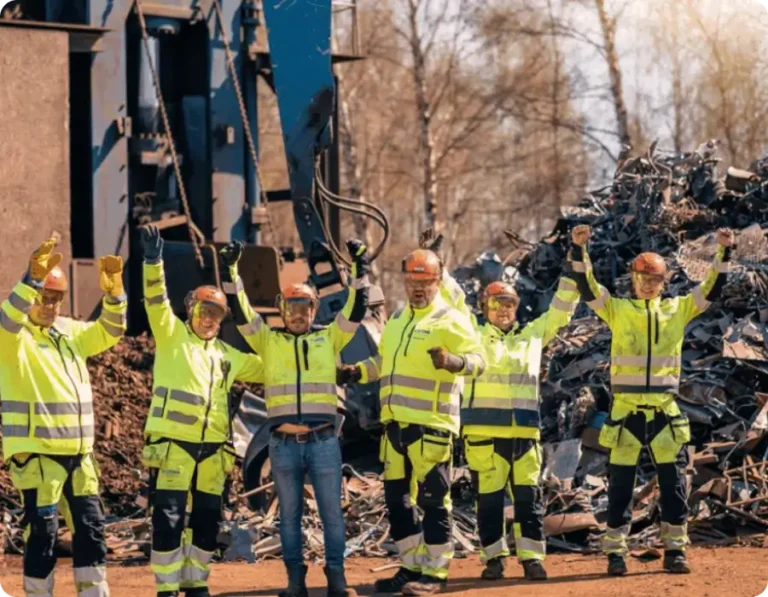
Every year, Stena Recycling oversees the recycling of six million tons of waste and supplies customers with raw materials such as steel.
In November, some of the 425 employees at Stena Recycling were offered the possibility of measuring their mental health using HR-ON Wellbeing. Twice monthly, employees answer questions about how they are doing and their physical health.
If responses indicate that an employee needs help, the employee is contacted by an external psychologist or physiotherapist connected to HR-ON Wellbeing’s response unit for a confidential conversation.
“We have long prioritized physical safety. Now we prioritize mental wellbeing at the same level,” explains Leise Marud.
“The solution helps us gain a better overview of our working environment and prevent pressure before it escalates.”
A male industry with unique needs
Large energy companies with employees working offshore and internationally are increasingly using HR-ON Wellbeing.
There is growing demand for evaluating the mental part of workplace safety on equal footing with physical safety.
In industries dominated by men working in high-risk environments, the anonymous response unit plays an important role in making it easier to address issues before they escalate.
Wellbeing will need to be measured in the future
According to Signe Tønnesen from Lederne, ESG requirements coming into force in 2024 will make measuring workplace wellbeing essential for larger companies.
Companies must report on environmental, social and governance standards, including health and safety.
“Compliance with ESG requirements will be critical for business. But focusing on wellbeing and mental health will also be essential for long-term profitability and resilience in future crises.”
Summary
– Green companies are integrating mental wellbeing into sustainability strategies.
– HR-ON Wellbeing enables proactive stress measurement and access to external specialists.
– ESG requirements will increase focus on workplace mental health.
– Early detection and psychological safety strengthen resilience and long-term growth.