ystem identifier ────╯ * ╰──┴── name is "html". * * If a public identifier were provided it would indicate to a knowledgeable * parser how to interpret the system identifier. * * * │ │ ╰─── public identifier ─────╯ ╰──── system identifier ────╯ * ╰──┴── name is "html". * * @see https://html.spec.whatwg.org/#tokenization * * @since 6.7.0 * * @var string|null */ public $system_identifier = null; /** * Which document compatability mode this DOCTYPE declaration indicates. * * This value should be considered "read only" and not modified. * * When an HTML parser has not already set the document compatability mode, * (e.g. "quirks" or "no-quirks" mode), it will infer if from the properties * of the appropriate DOCTYPE declaration, if one exists. The DOCTYPE can * indicate one of three possible document compatability modes: * * - "no-quirks" and "limited-quirks" modes (also called "standards" mode). * - "quirks" mode (also called `CSS1Compat` mode). * * An appropriate DOCTYPE is one encountered in the "initial" insertion mode, * before the HTML element has been opened and before finding any other * DOCTYPE declaration tokens. * * @see https://html.spec.whatwg.org/#the-initial-insertion-mode * * @since 6.7.0 * * @var string One of "no-quirks", "limited-quirks", or "quirks". */ public $indicated_compatability_mode; /** * Constructor. * * This class should not be instantiated directly. * Use the static {@see self::from_doctype_token} method instead. * * The arguments to this constructor correspond to the "DOCTYPE token" * as defined in the HTML specification. * * > DOCTYPE tokens have a name, a public identifier, a system identifier, * > and a force-quirks flag. When a DOCTYPE token is created, its name, public identifier, * > and system identifier must be marked as missing (which is a distinct state from the * > empty string), and the force-quirks flag must be set to off (its other state is on). * * @see https://html.spec.whatwg.org/multipage/parsing.html#tokenization * * @since 6.7.0 * * @param string|null $name Name of the DOCTYPE. * @param string|null $public_identifier Public identifier of the DOCTYPE. * @param string|null $system_identifier System identifier of the DOCTYPE. * @param bool $force_quirks_flag Whether the force-quirks flag is set for the token. */ private function __construct( ?string $name, ?string $public_identifier, ?string $system_identifier, bool $force_quirks_flag ) { $this->name = $name; $this->public_identifier = $public_identifier; $this->system_identifier = $system_identifier; /* * > If the DOCTYPE token matches one of the conditions in the following list, * > then set the Document to quirks mode: */ /* * > The force-quirks flag is set to on. */ if ( $force_quirks_flag ) { $this->indicated_compatability_mode = 'quirks'; return; } /* * Normative documents will contain the literal `` with no * public or system identifiers; short-circuit to avoid extra parsing. */ if ( 'html' === $name && null === $public_identifier && null === $system_identifier ) { $this->indicated_compatability_mode = 'no-quirks'; return; } /* * > The name is not "html". * * The tokenizer must report the name in lower case even if provided in * the document in upper case; thus no conversion is required here. */ if ( 'html' !== $name ) { $this->indicated_compatability_mode = 'quirks'; return; } /* * Set up some variables to handle the rest of the conditions. * * > set...the public identifier...to...the empty string if the public identifier was missing. * > set...the system identifier...to...the empty string if the system identifier was missing. * > * > The system identifier and public identifier strings must be compared... * > in an ASCII case-insensitive manner. * > * > A system identifier whose value is the empty string is not considered missing * > for the purposes of the conditions above. */ $system_identifier_is_missing = null === $system_identifier; $public_identifier = null === $public_identifier ? '' : strtolower( $public_identifier ); $system_identifier = null === $system_identifier ? '' : strtolower( $system_identifier ); /* * > The public identifier is set to… */ if ( '-//w3o//dtd w3 html strict 3.0//en//' === $public_identifier || '-/w3c/dtd html 4.0 transitional/en' === $public_identifier || 'html' === $public_identifier ) { $this->indicated_compatability_mode = 'quirks'; return; } /* * > The system identifier is set to… */ if ( 'http://www.ibm.com/data/dtd/v11/ibmxhtml1-transitional.dtd' === $system_identifier ) { $this->indicated_compatability_mode = 'quirks'; return; } /* * All of the following conditions depend on matching the public identifier. * If the public identifier is empty, none of the following conditions will match. */ if ( '' === $public_identifier ) { $this->indicated_compatability_mode = 'no-quirks'; return; } /* * > The public identifier starts with… * * @todo Optimize this matching. It shouldn't be a large overall performance issue, * however, as only a single DOCTYPE declaration token should ever be parsed, * and normative documents will have exited before reaching this condition. */ if ( str_starts_with( $public_identifier, '+//silmaril//dtd html pro v0r11 19970101//' ) || str_starts_with( $public_identifier, '-//as//dtd html 3.0 aswedit + extensions//' ) || str_starts_with( $public_identifier, '-//advasoft ltd//dtd html 3.0 aswedit + extensions//' ) || str_starts_with( $public_identifier, '-//ietf//dtd html 2.0 level 1//' ) || str_starts_with( $public_identifier, '-//ietf//dtd html 2.0 level 2//' ) || str_starts_with( $public_identifier, '-//ietf//dtd html 2.0 strict level 1//' ) || str_starts_with( $public_identifier, '-//ietf//dtd html 2.0 strict level 2//' ) || str_starts_with( $public_identifier, '-//ietf//dtd html 2.0 strict//' ) || str_starts_with( $public_identifier, '-//ietf//dtd html 2.0//' ) || str_starts_with( $public_identifier, '-//ietf//dtd html 2.1e//' ) || str_starts_with( $public_identifier, '-//ietf//dtd html 3.0//' ) || str_starts_with( $public_identifier, '-//ietf//dtd html 3.2 final//' ) || str_starts_with( $public_identifier, '-//ietf//dtd html 3.2//' ) || str_starts_with( $public_identifier, '-//ietf//dtd html 3//' ) || str_starts_with( $public_identifier, '-//ietf//dtd html level 0//' ) || str_starts_with( $public_identifier, '-//ietf//dtd html level 1//' ) || str_starts_with( $public_identifier, '-//ietf//dtd html level 2//' ) || str_starts_with( $public_identifier, '-//ietf//dtd html level 3//' ) || str_starts_with( $public_identifier, '-//ietf//dtd html strict level 0//' ) || str_starts_with( $public_identifier, '-//ietf//dtd html strict level 1//' ) || str_starts_with( $public_identifier, '-//ietf//dtd html strict level 2//' ) || str_starts_with( $public_identifier, '-//ietf//dtd html strict level 3//' ) || str_starts_with( $public_identifier, '-//ietf//dtd html strict//' ) || str_starts_with( $public_identifier, '-//ietf//dtd html//' ) || str_starts_with( $public_identifier, '-//metrius//dtd metrius presentational//' ) || str_starts_with( $public_identifier, '-//microsoft//dtd internet explorer 2.0 html strict//' ) || str_starts_with( $public_identifier, '-//microsoft//dtd internet explorer 2.0 html//' ) || str_starts_with( $public_identifier, '-//microsoft//dtd internet explorer 2.0 tables//' ) || str_starts_with( $public_identifier, '-//microsoft//dtd internet explorer 3.0 html strict//' ) || str_starts_with( $public_identifier, '-//microsoft//dtd internet explorer 3.0 html//' ) || str_starts_with( $public_identifier, '-//microsoft//dtd internet explorer 3.0 tables//' ) || str_starts_with( $public_identifier, '-//netscape comm. corp.//dtd html//' ) || str_starts_with( $public_identifier, '-//netscape comm. corp.//dtd strict html//' ) || str_starts_with( $public_identifier, "-//o'reilly and associates//dtd html 2.0//" ) || str_starts_with( $public_identifier, "-//o'reilly and associates//dtd html extended 1.0//" ) || str_starts_with( $public_identifier, "-//o'reilly and associates//dtd html extended relaxed 1.0//" ) || str_starts_with( $public_identifier, '-//sq//dtd html 2.0 hotmetal + extensions//' ) || str_starts_with( $public_identifier, '-//softquad software//dtd hotmetal pro 6.0::19990601::extensions to html 4.0//' ) || str_starts_with( $public_identifier, '-//softquad//dtd hotmetal pro 4.0::19971010::extensions to html 4.0//' ) || str_starts_with( $public_identifier, '-//spyglass//dtd html 2.0 extended//' ) || str_starts_with( $public_identifier, '-//sun microsystems corp.//dtd hotjava html//' ) || str_starts_with( $public_identifier, '-//sun microsystems corp.//dtd hotjava strict html//' ) || str_starts_with( $public_identifier, '-//w3c//dtd html 3 1995-03-24//' ) || str_starts_with( $public_identifier, '-//w3c//dtd html 3.2 draft//' ) || str_starts_with( $public_identifier, '-//w3c//dtd html 3.2 final//' ) || str_starts_with( $public_identifier, '-//w3c//dtd html 3.2//' ) || str_starts_with( $public_identifier, '-//w3c//dtd html 3.2s draft//' ) || str_starts_with( $public_identifier, '-//w3c//dtd html 4.0 frameset//' ) || str_starts_with( $public_identifier, '-//w3c//dtd html 4.0 transitional//' ) || str_starts_with( $public_identifier, '-//w3c//dtd html experimental 19960712//' ) || str_starts_with( $public_identifier, '-//w3c//dtd html experimental 970421//' ) || str_starts_with( $public_identifier, '-//w3c//dtd w3 html//' ) || str_starts_with( $public_identifier, '-//w3o//dtd w3 html 3.0//' ) || str_starts_with( $public_identifier, '-//webtechs//dtd mozilla html 2.0//' ) || str_starts_with( $public_identifier, '-//webtechs//dtd mozilla html//' ) ) { $this->indicated_compatability_mode = 'quirks'; return; } /* * > The system identifier is missing and the public identifier starts with… */ if ( $system_identifier_is_missing && ( str_starts_with( $public_identifier, '-//w3c//dtd html 4.01 frameset//' ) || str_starts_with( $public_identifier, '-//w3c//dtd html 4.01 transitional//' ) ) ) { $this->indicated_compatability_mode = 'quirks'; return; } /* * > Otherwise, if the DOCTYPE token matches one of the conditions in * > the following list, then set the Document to limited-quirks mode. */ /* * > The public identifier starts with… */ if ( str_starts_with( $public_identifier, '-//w3c//dtd xhtml 1.0 frameset//' ) || str_starts_with( $public_identifier, '-//w3c//dtd xhtml 1.0 transitional//' ) ) { $this->indicated_compatability_mode = 'limited-quirks'; return; } /* * > The system identifier is not missing and the public identifier starts with… */ if ( ! $system_identifier_is_missing && ( str_starts_with( $public_identifier, '-//w3c//dtd html 4.01 frameset//' ) || str_starts_with( $public_identifier, '-//w3c//dtd html 4.01 transitional//' ) ) ) { $this->indicated_compatability_mode = 'limited-quirks'; return; } $this->indicated_compatability_mode = 'no-quirks'; } /** * Creates a WP_HTML_Doctype_Info instance by parsing a raw DOCTYPE declaration token. * * Use this method to parse a DOCTYPE declaration token and get access to its properties * via the returned WP_HTML_Doctype_Info class instance. The provided input must parse * properly as a DOCTYPE declaration, though it must not represent a valid DOCTYPE. * * Example: * * // Normative HTML DOCTYPE declaration. * $doctype = WP_HTML_Doctype_Info::from_doctype_token( '' ); * 'no-quirks' === $doctype->indicated_compatability_mode; * * // A nonsensical DOCTYPE is still valid, and will indicate "quirks" mode. * $doctype = WP_HTML_Doctype_Info::from_doctype_token( '' ); * 'quirks' === $doctype->indicated_compatability_mode; * * // Textual quirks present in raw HTML are handled appropriately. * $doctype = WP_HTML_Doctype_Info::from_doctype_token( "" ); * 'no-quirks' === $doctype->indicated_compatability_mode; * * // Anything other than a proper DOCTYPE declaration token fails to parse. * null === WP_HTML_Doctype_Info::from_doctype_token( ' ' ); * null === WP_HTML_Doctype_Info::from_doctype_token( '

' ); * null === WP_HTML_Doctype_Info::from_doctype_token( '' ); * null === WP_HTML_Doctype_Info::from_doctype_token( 'html' ); * null === WP_HTML_Doctype_Info::from_doctype_token( '' ); * * @since 6.7.0 * * @param string $doctype_html The complete raw DOCTYPE HTML string, e.g. ``. * * @return WP_HTML_Doctype_Info|null A WP_HTML_Doctype_Info instance will be returned if the * provided DOCTYPE HTML is a valid DOCTYPE. Otherwise, null. */ public static function from_doctype_token( string $doctype_html ): ?self { $doctype_name = null; $doctype_public_id = null; $doctype_system_id = null; $end = strlen( $doctype_html ) - 1; /* * This parser combines the rules for parsing DOCTYPE tokens found in the HTML * specification for the DOCTYPE related tokenizer states. * * @see https://html.spec.whatwg.org/#doctype-state */ /* * - Valid DOCTYPE HTML token must be at least `` assuming a complete token not * ending in end-of-file. * - It must start with an ASCII case-insensitive match for `` must be the final byte in the HTML string. */ if ( $end < 9 || 0 !== substr_compare( $doctype_html, '`? if ( '>' !== $doctype_html[ $end ] || ( strcspn( $doctype_html, '>', $at ) + $at ) < $end ) { return null; } /* * Perform newline normalization and ensure the $end value is correct after normalization. * * @see https://html.spec.whatwg.org/#preprocessing-the-input-stream * @see https://infra.spec.whatwg.org/#normalize-newlines */ $doctype_html = str_replace( "\r\n", "\n", $doctype_html ); $doctype_html = str_replace( "\r", "\n", $doctype_html ); $end = strlen( $doctype_html ) - 1; /* * In this state, the doctype token has been found and its "content" optionally including the * name, public identifier, and system identifier is between the current position and the end. * * "" * ╰─ $at ╰─ $end * * It's also possible that the declaration part is empty. * * ╭─ $at * "" * ╰─ $end * * Rules for parsing ">" which terminates the DOCTYPE do not need to be considered as they * have been handled above in the condition that the provided DOCTYPE HTML must contain * exactly one ">" character in the final position. */ /* * * Parsing effectively begins in "Before DOCTYPE name state". Ignore whitespace and * proceed to the next state. * * @see https://html.spec.whatwg.org/#before-doctype-name-state */ $at += strspn( $doctype_html, " \t\n\f\r", $at ); if ( $at >= $end ) { return new self( $doctype_name, $doctype_public_id, $doctype_system_id, true ); } $name_length = strcspn( $doctype_html, " \t\n\f\r", $at, $end - $at ); $doctype_name = str_replace( "\0", "\u{FFFD}", strtolower( substr( $doctype_html, $at, $name_length ) ) ); $at += $name_length; $at += strspn( $doctype_html, " \t\n\f\r", $at, $end - $at ); if ( $at >= $end ) { return new self( $doctype_name, $doctype_public_id, $doctype_system_id, false ); } /* * "After DOCTYPE name state" * * Find a case-insensitive match for "PUBLIC" or "SYSTEM" at this point. * Otherwise, set force-quirks and enter bogus DOCTYPE state (skip the rest of the doctype). * * @see https://html.spec.whatwg.org/#after-doctype-name-state */ if ( $at + 6 >= $end ) { return new self( $doctype_name, $doctype_public_id, $doctype_system_id, true ); } /* * > If the six characters starting from the current input character are an ASCII * > case-insensitive match for the word "PUBLIC", then consume those characters * > and switch to the after DOCTYPE public keyword state. */ if ( 0 === substr_compare( $doctype_html, 'PUBLIC', $at, 6, true ) ) { $at += 6; $at += strspn( $doctype_html, " \t\n\f\r", $at, $end - $at ); if ( $at >= $end ) { return new self( $doctype_name, $doctype_public_id, $doctype_system_id, true ); } goto parse_doctype_public_identifier; } /* * > Otherwise, if the six characters starting from the current input character are an ASCII * > case-insensitive match for the word "SYSTEM", then consume those characters and switch * > to the after DOCTYPE system keyword state. */ if ( 0 === substr_compare( $doctype_html, 'SYSTEM', $at, 6, true ) ) { $at += 6; $at += strspn( $doctype_html, " \t\n\f\r", $at, $end - $at ); if ( $at >= $end ) { return new self( $doctype_name, $doctype_public_id, $doctype_system_id, true ); } goto parse_doctype_system_identifier; } /* * > Otherwise, this is an invalid-character-sequence-after-doctype-name parse error. * > Set the current DOCTYPE token's force-quirks flag to on. Reconsume in the bogus * > DOCTYPE state. */ return new self( $doctype_name, $doctype_public_id, $doctype_system_id, true ); parse_doctype_public_identifier: /* * The parser should enter "DOCTYPE public identifier (double-quoted) state" or * "DOCTYPE public identifier (single-quoted) state" by finding one of the valid quotes. * Anything else forces quirks mode and ignores the rest of the contents. * * @see https://html.spec.whatwg.org/#doctype-public-identifier-(double-quoted)-state * @see https://html.spec.whatwg.org/#doctype-public-identifier-(single-quoted)-state */ $closer_quote = $doctype_html[ $at ]; /* * > This is a missing-quote-before-doctype-public-identifier parse error. Set the * > current DOCTYPE token's force-quirks flag to on. Reconsume in the bogus DOCTYPE state. */ if ( '"' !== $closer_quote && "'" !== $closer_quote ) { return new self( $doctype_name, $doctype_public_id, $doctype_system_id, true ); } ++$at; $identifier_length = strcspn( $doctype_html, $closer_quote, $at, $end - $at ); $doctype_public_id = str_replace( "\0", "\u{FFFD}", substr( $doctype_html, $at, $identifier_length ) ); $at += $identifier_length; if ( $at >= $end || $closer_quote !== $doctype_html[ $at ] ) { return new self( $doctype_name, $doctype_public_id, $doctype_system_id, true ); } ++$at; /* * "Between DOCTYPE public and system identifiers state" * * Advance through whitespace between public and system identifiers. * * @see https://html.spec.whatwg.org/#between-doctype-public-and-system-identifiers-state */ $at += strspn( $doctype_html, " \t\n\f\r", $at, $end - $at ); if ( $at >= $end ) { return new self( $doctype_name, $doctype_public_id, $doctype_system_id, false ); } parse_doctype_system_identifier: /* * The parser should enter "DOCTYPE system identifier (double-quoted) state" or * "DOCTYPE system identifier (single-quoted) state" by finding one of the valid quotes. * Anything else forces quirks mode and ignores the rest of the contents. * * @see https://html.spec.whatwg.org/#doctype-system-identifier-(double-quoted)-state * @see https://html.spec.whatwg.org/#doctype-system-identifier-(single-quoted)-state */ $closer_quote = $doctype_html[ $at ]; /* * > This is a missing-quote-before-doctype-system-identifier parse error. Set the * > current DOCTYPE token's force-quirks flag to on. Reconsume in the bogus DOCTYPE state. */ if ( '"' !== $closer_quote && "'" !== $closer_quote ) { return new self( $doctype_name, $doctype_public_id, $doctype_system_id, true ); } ++$at; $identifier_length = strcspn( $doctype_html, $closer_quote, $at, $end - $at ); $doctype_system_id = str_replace( "\0", "\u{FFFD}", substr( $doctype_html, $at, $identifier_length ) ); $at += $identifier_length; if ( $at >= $end || $closer_quote !== $doctype_html[ $at ] ) { return new self( $doctype_name, $doctype_public_id, $doctype_system_id, true ); } return new self( $doctype_name, $doctype_public_id, $doctype_system_id, false ); } } Sådan minimiere du data i rekrutteringsprocessen • HR-ON

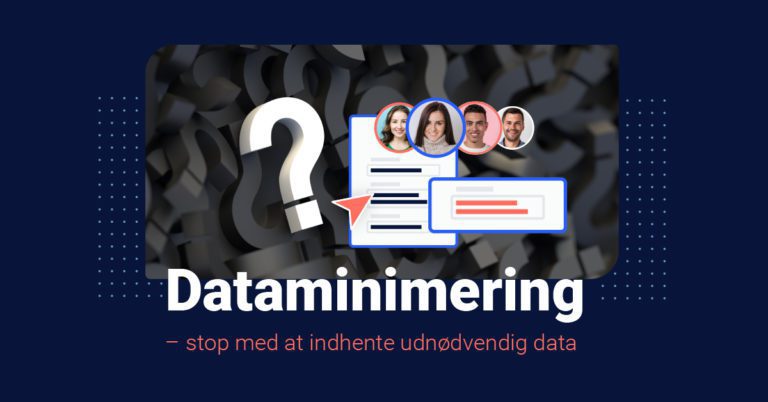
Dataminimering

Dataminimering er nødvendig når du rekrutterer

Dataminimering er nødvendig når du rekrutterer 1200 628 HR-ON

Dataminimering er nødvendig når du rekrutterer 

Sørger I for at genoverveje fra en rekruttering til den næste, hvad der egentlig er brug for af data fra ansøgere? Eller gør I, som I plejer, og indsamler måske hellere for meget end for lidt? Undgå at komme på kant med GDPR ved kun at stille relevante spørgsmål i ansøgningsformularen.

Når I har sat jagten ind efter nye medarbejdere, og sender jobopslaget med den tilhørende ansøgningsformular ud i verden, kan det give god mening at bruge en meget skrabet udgave af en ansøgningsformular.

Med andre ord: Vent med at bede ansøgerne om at uploade eksamensbevis, straffeattest og så videre, indtil kandidatfeltet er skrænket ind. På den måde mindskes risikoen for at I overtræder persondataforordningen (GDPR), der siger, at I kun bør indsamle den mængde data, der er et formål med at opbevare.

Dette princip kaldes også for dataminimering. Men hvordan skal det forstås, og hvad er dataminimering egentlig? Dataminimeringsprincippet er, når I nøjes med at indhente og opbevare de oplysninger, der er nødvendige i relation til den pågældende rekruttering. Læs mere hos Datatilsynet.

Sådan minimerer I data

Start forfra – drop genbrugen af den gamle ansøgningsformular
Den nemmeste måde at finde ud af, hvor meget I kan skære væk, er at starte forfra. I stedet for at redigere i en gammel ansøgningsformular, er det nemmere at tænke processen helt på ny. Hvad har I egentlig brug for at vide om jeres ansøgere i allerførste spæde step af rekrutteringen?

Indhent og få styr på de helt centrale og basale informationer til en start
I mange situationer er det faktisk nok at bede om navn, e-mail, telefon, CV og ansøgning. Har I brug for at spørge specifikt til uddannelse? Det står jo formentligt i ansøgerens CV. Har I brug for at kende ansøgerens adresse? Næ, vel? Hvilket formål tjener det i første del af rekrutteringsrunden? 

Du kan altid hente yderligere oplysninger senere i processen
Hvis det tjener et formål at spørge til ansøgerens adresse, så er det helt okay, men ellers kan I overveje at indhente den oplysning senere. Dermed sikrer I, at I udelukkende opbevarer adressen til den eller de ansøgere, hvor det er relevant at opbevare vedkommendes adresse. Det vil typisk først være, når I har fundet den person, I ønsker at ansætte.

Undgå ulovlige spørgsmål i ansøgningsformularen

Husk også at det i Danmark ikke længere er tilladt at spørge ansøgere om følgende i en rekrutteringsproces:

  • Alder
  • Religiøs overbevisning
  • Seksualitet
  • Politisk orientering
  • Etnisk oprindelse

Der er dog undtagelser for eksempel når det vedrører alder, hvilket du kan læse mere om i indlægget her.

Med HR-ON Recruit som rekrutteringsplatform har I en støtte i ryggen, når det kommer til at stille de rigtige spørgsmål. Vi har en ansøgningsformular klar, som er skraldet for den type spørgsmål, I kommer på kant med GDPR ved at stille. Derudover kan I let tilpasse ansøgningsformularen og dermed stille så få spørgsmål, I ønsker.

Interesseret i at få mere at vide om dine muligheder med HR-ONs produkter? Book en demo i dag og få et indblik i hvordan du kan spare tid og gøre din hverdag nemmere.